Showing posts with label Cathars. Show all posts

Tuesday, 2 September 2008

THE ENIGMA OF THE CATHARS: EPILOGUE


"That was the true Light, which lighteth every man that cometh into the world. He was in the world, and the world was made by him, and the world knew him not. He came unto his own, and his own received him not. But as many as received him, to them gave he power to become the sons of God, even to them that believe on his name: which were born, not of blood, nor the will of the flesh, nor of the will of man, but of God." Gospel of John

So why were the Cathars so important? Historically speaking, as the first great heresy to challenge the Church in the Middle Ages they paved the way for the vast array of heresies which followed in their wake. The Lollards in England, the Brethren of the Free Spirit in Germany, the Taborites in Bohemia and the Beguines and Beghards of Belgium, Holland, the Rhineland and northern France were all influenced and affected by the grass-roots spirituality they represented. Its a fascinating and little remarked fact that many of the areas where these heresies sprang up were Cathar centres. All had in common with the Pure Ones an emphasis on the individual as opposed to the State and the Church. All believed in the ability of the Holy Spirit to dwell within us all and many, the Beguines and Beghards in particular, appealed to traditionally disenfranchised sectors of society such as women and the poor. Even the Mystics of the Rhine such as the genius Meister Eckhardt, Henry Suso and Johannes Tauler, all of whom vigourously denied heresy and spoke against these movements from within the Church, shared with the Cathars a vision of God and Christ becoming 'born' within the human Soul. Significantly, all three ran into trouble with the Inquisition, Eckhardt in particular falling foul of their investigations. Doctrinally and politically the Cathars may have differed from these later groups, but their attempt to reestablish an Apostolic, Mystical Christianity more closely modeled on that of Christ which stood in opposition to the Church was clearly an inspiration on movements to come.

The Cathars were also the first to translate the Bible into the vernacular, a key element in all the heresies to follow. In an effort to break the monopoly on the Word possessed by the Latin-speaking Church, they translated whole parts of the New Testament into Languedoc French. In so doing they helped pave the way for figures such as Wycliffe and Tyndale in England and Luther in Germany. Ironically, it was Church suppression of the Cathars which probably lead to the ultimate decline of Rome as the primary expression of Christianity in Western Europe. Although the Church defeated the Cathars the brutality with which they did so created widespread revulsion and helped fuel the growth of heresy and reform movements across the continent. Militarily they had won but morally the Cathars were victorious. The stain of the Cathar Crusade and the Inquisition is still being worked off today.


Ultimately the stone the Cathars set rolling would lead to the Protestant movement, inspired by Luther, which eventually fought Rome to a standstill. Luther's Christianity was a far cry from Catharism. Indeed the Cathars would have probably resisted it as little better than Catholicism, but that was probably why the military and political force was able to swing behind it to defeat the Church. The pure form of Christianity the Cathars represented would never have been appealing to the ruling classes and, by its very nature, would have abjured the military might needed to defeat Crusaders and Catholic armies. At the same time, it would have been unlikely that Luther would have viewed the Cathars with much enthusiasm either.

Ironically, Catharism also effected the Church. As mentioned earlier, the Dominican Order was explicitly set up to combat the Cathars as exemplars of the Apostolic Ideal within Catholicism. It is widely thought that the Franciscan Order was allowed to be founded for similar reasons. The moral call for a return to the way of the Apostles the Cathars put out was responded to in kind. Ironically, the Spiritual Franciscans, the branch of Order who most sought to emulate the original Little Brother's way of life, also ran into trouble with the Church and were denounced as heretics.

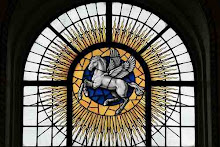
In our own time, the Cathars have undergone an enormous upsurge of interest. In esoteric circles, their doctrines have been taken up and identified as key elements in the development of Western spirituality. An eccentric French intellectual, Napoleon Peyrat first began the Cathar revival in the 19th Century, weaving rather lurid and fantastical theories about them (Esclarmonde de Foix, mother of seven children and matriarch of the Foix family was recast as a young, beautiful Joan of Arc figure by him, for instance). In the 20th Century, preeminent esotericist Rudolf Steiner identified the Cathars as important antecedents to Theosophy and Anthroposophy. Some have linked the Cathars to the founder of the Brotherhood of the Rose Cross, identifying Christian Rosenkreutz as a Cathar survivor smuggled to a Templar refuge after the fall of Montsegur. The Cathar-Templar connection has caused a great deal of speculation, particularly given the association with the Holy Grail ascribed to these two movements. A sympathetic relationship between them is disputed but the Templars had a major presence in the Languedoc (indeed they saw it as a prime candidate for their Ordenland) and, perhaps not insignificantly, they refused to take part in the Crusades against the Cathars. Some commentators have pointed to the possibility of certain Templar families having Cathar members as indications of a link. It is thought that the Templars, who seem to have been great absorbers of other spiritualities from Sufism to Alchemy and Kabbalah, adopted certain key Cathar ideas. That both movements were dedicated to protecting the scandalous knowledge that Christ was married to Mary Magdelene and had a child by her is entirely down to the speculations of Dan Brown and Messrs Baigent, Lincoln and Leigh... In this Winged Horse's humble opinion, this is the least interesting possibility concerning the Cathar-Templar connection and reduces two visionary, mystical groups to the level of keepers of religious gossip...

Keen esotericists will have spotted within Cathar doctrine key spiritual ideas - Reincarnation, Subtle Bodies/Higher Selves (the Angelic Bodies in the air which so echo those described as being left in the Pleroma by the Christian Gnostics of Valentinus), the 'Spiritualising' of Matter (a fundamental aim of Alchemy) and a God of Light that transcends the material world - all of which have fed into modern esoteric ideas and are shared in common with Eastern spirituality. Not everything about them may be that appealing to the modern sensibility: the extreme austerity of Parfait life, the hostility (or apparent hostility) to the created world and the body, for instance. Some of what they did may even seem ridiculous: so determined not to lie were the Parfaits that they developed a tortured way of speaking in the conditional which often gave them away. But there is something about the Cathars which haunts the mind and animates the soul. The purity of their vision, their absolute spirituality, their egalitarian outlook, their refusal to back down or recant even in the face of death, their belief in the possibility of universal transformation through the Holy Spirit, all testify to a remarkable flowering of an ideal in a continent famous for brutality, violence, materialism and religious hypocrisy. Simone Weil remarked upon their famous holiness, denying the Church's right to judge them as heretics on the grounds of their clear love for Christ.

In France today, the Languedoc has so embraced its Cathar past that the region is now known as the Pays Cathar ('the Country of the Cathars'). There is an element of commercialisation here but there is also a very real pride in an episode in their history when something remarkable flourished and was stamped out. Certainly walking in the area, standing in Montsegur, travelling among the Pyrenees, crouching in the caves they hid in and exploring the towns and streets they walked, one gets the impression that the Cathars are far from being a dead spirituality. Released from the flesh by the Church in the 13th Century they are back and walking among us now...

"In the beginning was the Word, and the Word was with God, and the Word was God. The same was in the beginning with God. All things were made by him; and without him nothing was made. In him was life, and the life was the light of men. And the light shineth in the darkness; and the darkness comprehended it not..."

THE ENIGMA OF THE CATHARS: PART FIVE

"These things have I spoken unto you, that ye should not be offended. They shall put you out of the synagogues: yea, the time cometh, that whomsoever killeth you will think that he doeth God service. And these things will they do unto you, because they have not known the Father, nor me." - Gospel of John

It took four decades of bloody fighting before the Cathars were finally destroyed as a major presence in the Languedoc. The brutality of the conflict was unsurpassed, even by Medieval standards, with whole towns and communities put to the sword by the marauding Crusaders. Most notorious was the sack of Beziers where 20000 citizens were slaughtered when they refused to hand over 2000 Cathars in their midst. The story has it that when the gates of Beziers fell and the Crusaders poured in to kill the Cathars, they asked their leaders how they would be able to tell the difference between heretics and fellow Catholics. The answer came: 'Kill them all. God will know his own'. Records show that no-one survived the bloodbath. Beziers was razed to the ground.

Important Languedoc families came to the aid of the Cathars, some, like the Comtes de Foix, because members of their family were of the movement, others, like Duke Raymond of Toulouse, because he hated the incursion on his territory first by Crusaders and then by the northern French. Campaigns raged backwards and forwards, with Raymond and his sons leading the resistance, constantly being defeated but constantly looking for a way of rising up again to defeat the Crusaders under the savage Simon de Montfort. So hated was de Montfort that when he was killed during a siege of Toulouse by a slingshot fired by a group of women, a cheer went up across the entire city walls. Panicked by the death of their previously invincible leader, the Crusaders fled and the Languedoc people were able to roll back the invasion, albeit temporarily. At one point King Pedro of Aragon took the field to defend the region against Rome and was roundly defeated in a tragically bungled battle in which he and his entourage of Knights were surrounded and cut down to a man.

All this time the Cathar Parfaits continued to operate, resorting to more and more subterfuges to slip the net of the marauding Crusaders. As a means to root out the heresy, the Pope ordered the formation of the Inquisition by the Dominicans. The reign of terror this august organisation began spread all across Western Europe with whole communities informing upon each other to escape investigation. Friends and neighbours were denounced as Cathars, 'proof' was negligible and one by one the heretics were hunted down. Refusal to recant meant death at the stake. Even if someone was dead and condemned posthumously, their body would be exhumed and burnt as an example. In some instances terminally ill Cathars were carried to the stake in their beds and put to death. And yet recantations were almost nil. Most Cathars chose to go to their deaths rather than surrender their faith. Records show that onlookers and soldiers who lit the fires were astonished at the calm with which they faced their end. It would seem their unwavering belief in their impending release from Satan's world meant they feared nothing.


The final showdown took place at the now legendary citadel Montsegur (literally 'Mount Secure'), an extraordinarily remote fortress built on top of an almost insurmountable Pog in the Languedoc hills near Foix. The final onslaught had been triggered by the assassination by a group of Cathar sympathisers of a troop of Dominican Inquisitors. Unable to tolerate this final act of violence, the Church launched one last, decisive campaign. The remaining Cathar leadership holed themselves up in Montsegur, protected by mercenaries and sympathetic Knights and prepared to fight on. The held out for almost a year, hoping for relief from Raymond of Toulouse or the Comtes de Foix. But this time it did not come. Eventually the outer defences were breached and the outlook became hopeless. The Cathars and the Crusaders made a truce. Sick of the fighting, the Crusaders' terms were surprisingly fair. The Cathars would have a few weeks of calm before they had to hand themselves over and any who agreed to recant would be allowed to go free unharmed. On the final night before the truce expired, the Cathar leaders gave the offer to their followers and soldiers who had defended them to undergo the Consolamentum and become Parfaits should they wish to. Twenty four Croyants came forward to receive the Holy Spirit.

The next day the entire Cathar leadership were burnt at the foot of the Pog at a spot commemorated today by a small stone obelisk. Inquisition records relate that, as this was happening, three Cathars slipped away via secret route with 'the Treasure of the Cathars' to make contact with other cells in Italy and France. Speculation is rife with what that 'Treasure' was, from the Holy Grail to possible sacred texts to, quite simply, money with which the Cathar movement could continue. But to all intents and purposes, the movement was dead. One final siege occured a decade later at Queribus, but this was an isolated remnant. The main Cathar leadership had been killed at Montsegur. Some ragtag survivors continued to operate into the 14th Century in villages like Montaillou, but eventually they were tracked down and killed by the Inquisition. The last remaining Cathar leader is said to have sealed himself up in the Lombrives Cave with a hundred or so followers to escape the Pope's soldiers, never to emerge. Stories tell of how when 'le Bon Roi' King Henry 4th of France came to the throne and brought in his edict of Religious Tolerance, thus bringing to an end centuries of Catholic/Protestant conflict, he reopened the Cave and had the Cathar remains given a proper burial. If it were true it would not be surprising. After all, Henry was a member of the Comtes de Foix, the famous aristocratic dynasty which had fought to defend the Cathars and counted members in their bloodline.

But that was in the 17th Century. By the 14th Century the Cathars were finished. Other heresies would spring up over the next few centuries but the Pure Ones would rise no more.

Monday, 1 September 2008

THE ENIGMA OF THE CATHARS: PART FOUR

"Neither pray I for for these alone, but for them also which shall believe on me through their word; that they all may be one; as thou, Father, art in me, and I in thee, that they also may be one in us... And the glory which thou gavest me I have given them, that they may be one, as even we are one: I in them, and thou in me, that they may be made perfect in one..." Gospel of John

It was this vision of the Parfait as receptacle for the Holy Spirit that is thought to be the origin of the Mystery of the Holy Grail. Aside from the wild speculations of Dan Brown, Baigent and Lincoln, the theory goes that the Legend of the Holy Grail as passed down through the Troubadours and Minnesingers (eg Chretien de Troyes and Wolfram von Eschenbach) was a coded version of the Cathar doctrine of the transfiguration of the Self by the Holy Spirit sent by God through Christ. Thus the Grail, far from being a physical object (or even Mary Magdelene!) was us - all humanity - equally able to be transformed and reconnected to our Angelic Selves. In saying 'equally', this was literally true, as the Cathars made their particular idea of Redemption available to all regardless of gender, race or class. Focussing more on the Soul than the Body, they took the notion of Reincarnation to its logical conclusion. If one could be born as a nobleman in one life and a milkmaid in another, how could anyone possibly discriminate against anyone on such grounds? In this they were, once again, in accord with New Testament teaching. As Paul says:

"There is neither Jew nor Greek, there is neither bond nor free, there is neither male nor female: for ye are all one in Jesus Christ."

This egalitarian approach was, as can be imagined, fairly anathema to the Church and the Feudal Authorities who depended upon people knowing their place. There is a famous story about a disputation taking place between a group of Cathar Parfaits and delegates of the Church at which Esclarmonde de Foix, a Parfaite from one of the most powerful Languedoc noble families, got up to speak. Used to being allowed to preach as a Cathar, she was shocked to be shouted at by one of the Catholic delegates who insisted that, as a woman she should sit down and shut up. Catharism's appeal to those areas of society which tended to be downtrodden and rejected by the Church - women, the poor - was one of its great strengths for the population of the region. The fact that women could play an equal role to the men set it apart from the institutional misogyny of the Church. Once again, the Cathars appeared to be connecting more closely with the ideals of Christ than the Priesthood and the Pope.

Another thing which infuriated the Church was the Cathar refusal to acknowledge any of their Feast Days or Sacraments, which they denounced as blatant corruptions of Christ's teachings. They rejected the the rite of Holy Communion, or rather the notion of transubstantiaton on the grounds that, firstly, Christ was not Material and thus the Host and Wine could not possibly become flesh and blood and, secondly, that there was something obscene about Christ's body passing through the digestive system of humans. Once again the Cathars understood the words of Christ about the need to drink of his blood and eat of his flesh symbolically. Always issues of Matter became Spirit for them. In their version of the Lord's Prayer, rather than asking for Daily Bread they asked for the 'Cosubstantive Bread', or Spiritual Bread (in fact closer to the meaning of the original Aramaic). In keeping with their anti-materialism, they offered their sacraments and absolutions from Sin without demanding money and never took tithes. This was equally frustrating to the Church, whose economic survival depended upon it.

Cathar sacraments were always held in natural places - in forests, caves, fields or by rivers. The only times they held services in buildings was, as mentioned before, in the homes of Croyants. Never once did they build a Church or Chapel of any kind, believing, like Paul, that God 'dwelleth not in temples made with hands'. Again as anti-materialists building monuments to God was anathema to them. Even the famous 'Cathar Castles' were not constructed by them, rather they were chosen as defensive positions and fortified by Cathar-sympathising families such as the Comtes de Foix. Herein lies a mystery. For a movement which purportedly despised Matter and viewed the natural world as the creation of Satan, the Cathars seemed to operate in perfect harmony with it. Forests, rivers, caves and fields are strange places to chose for worship for nature-hating people. Some commentators have drawn comparison between this practise of the Cathars and their Pagan predecessors the Druids who also held services in such places. Similarly in India such locations are regarded as ideal places in which to meditate and communicate with the Deity. It is believed that the Cathar Initiates, as they underwent the process of training to become Parfaits through the Holy Spirit were prepared through a long process in the cave networks in the Pyrenees mountains near Tarascon. Key complexes such as the Lombrives are said to have housed whole communities of Cathar Parfaits and served as the final hiding place of refugees fleeing the Inquisition. Haunting caverns such as those known as the Cathedral (so-called because it is equal in size to Notre Dame in Paris) and the beautiful Bethlehem Cave where the process of 'Perfection' was completed testify to the role of these natural hollows in Cathar Initiations and Rituals. And yet Church records insist that the Cathars viewed Nature as irredeemably corrupt and of the Devil. Clearly there is a contradiction here that needs further exploration.


Cathar popularity hit its peak in the early 13th Century, when it first drew the attention of the Church. To begin with, Pope Innocent sought to combat the growing heresy peacefully and by reasonable means. Church dignitaries were sent to preach against the Parfaits and disputations were held. Whole town populations would turn out to witness these debates. It was rather like a sort of theological football match. Records show that on almost every occasion the Church would lose before a word was spoken. As soon as the Dignitaries would turn up with their lavish robes, entourage and train of carriages and retainers, the crowds would look at the Parfaits with their simple clothes, ragged shoes and look of poverty and immediately the moral victory went to the heretics. Even the Catholic icon St Bernard of Clairvaux could not make any headway with them. Indeed, he came away from his encounters with them acknowledging that they 'could not be more Christian'. The legendary St Dominic, then just starting on his religious career, spent several years preaching in the Languedoc to no avail, finally unleashing a torrent of anger at the apostate southern French and fully supporting the Crusades that were to come. Indeed he and his Order were to become the chief architects of the Inquisition. The Cathars were too popular and the Church too corrupt in the region for peaceful means to make any headway. Then in 1208 Cathar sympathisers murdered a representative of the Pope. The reaction was swift and direct. A Crusade was ordered against the Cathars and the Languedoc nobility that tolerated them. An army lead by Simon de Montfort was launched against southern France and the fate of the Cathars was sealed...

Saturday, 30 August 2008

THE ENIGMA OF THE CATHARS: PART THREE


"God is light, and in him is no darkness at all. If we say that we have fellowship with him, and walk in the darkness, we lie, and do not the truth: but if we walk in the light as he is in the light, we have fellowship with one another, and the blood of Jesus Christ his Son cleanseth us from sin." - First Epistle of John

For the Cathars, Jesus Christ was made up of pure Spirit and had no material form. As an emissary from the True God he could contain no element of the corrupt Creation of Satan and thus only had the appearance of a physical form. This wholly spiritual Christ was utterly incomprehensible to the Church, for whom the notion of Christ's Resurrection in the flesh was the whole essence of the Christian message. Since Tertullian's insistence that physical Resurrection was what was taught in the Gospels and the Epistles, the idea that our material forms would reemerge in Judgement Day had been a central plank of Catholic Theology. Indeed, the physical humanity of Christ coupled with his Divine Nature was a key element in what his Mission on Earth meant to Christians from Rome to Constantinople. It still is today. For the Cathars, however, this was a deception propagated by the Devil as part of his desire to destroy our awareness of our Christ-like Nature. As the Son, Jesus was sent by God to show us the way to return to the Light Realms of pure Spirit. As human mortality was a result of Satan's Creation, the Son of God could not be confined by the taint of Matter. As John's Gospel says:

“God is a Spirit: and they that worship him must worship him in spirit and in truth”

This vision of a purely spiritual Christ drew accusations of Docetism from the Church and was derided as meaning that Christ was no more than a phantom. But in fact the implications of this view of the Cathars are rather more interesting. Firstly, by identifying Christ as a spiritual being, they were able to release him from his historical aspect, something which has fixated the Church for millenia. Thus Christ ceased to be confined by Space and Time but became a Universal Being , present beyond those boundaries. Thus in contrast to much of Church theology outside a few Mystics, the Cathars believed in Christ in his Cosmic aspect as opposed to a person who lived and died in 1st Century Judea. Secondly, by describing Christ in this way the Cathars were making a profound point about the nature of Divine Humanity - that in essence Christ was an image of our Angelic Nature ie that in reality we were all Christs, or potentially Christs, just as the Gnostic Gospel of Philip says. Christ's preeminance as the Son, an expression of God, set him above us all but his appearance and his Path presented the possibility of us all regaining our Angelic Nature in Light. Thus the Crucifixion was not the focus of the Gospel Story for the Cathars, rather the entire span of Christ's life as described therein - Birth, Baptism, Transfiguration, Glorification, Crucifixion, Death, Resurrection, Ascension and ultimate return to the Father. Thus Eternal Life in Jesus Christ was interpreted as release from the cycle of Reincarnation and reunion with God:

"For God so loved the world, that he gave his only begotten Son, that whosoever believeth in him should not perish, but be given everlasting life. For God sent not his Son into the world to condemn the world; but that the world through him might be saved."


It was this hostility to the Crucifixion as the iconic event in Christ's life that was especially abhorrent to the Church as it involved open preaching on behalf of the Cathars against the Cross as a symbol of the Son. As pretty much everyone knows, the Cross has been the central sacred image for Christians before and after the Cathars, embodying the ultimate sacrifice Christ underwent to save humanity from Sin. For the Cathars, though, it was a symbol of suffering, torture and pain and thus a slander upon Christ. One Parfait is recorded as saying that a man should smash a Crucifix 'as a father would smash the gallows upon which his son was hanged'. As a piece of Matter, it was doubly part of Satan's realm and worship of it was particularly idolatrous. Understandably, the Church viewed such polemic as deeply sacreligious and accused the Cathars of all manner of desecration of sacred sites.

So Christ's story was an embodiment of the Way. By following him, by walking in his footsteps, humanity could be transformed as he was transformed. The key part of this process for the Cathars, was the action of the Holy Spirit, released into this world by Christ and passed down to the Parfaits by an unbroken chain of links from the Apostles. It was here, in the transformative agency of the Holy Spirit conveyed through the laying on of hands in the ritual known as the Consolamentum, that the heart of Cathar spirituality lay. It was also where its fundamentally different focus to the Church appeared. For where Catholicism laid the ultimate importance upon the Cruficixion, Catharism looked towards the Holy Spirit as the key. Christ had shown the way, but his legacy was the Holy Spirit, a gift or 'charism' given to the human race to enable it to realise its Divine Humanity. What Christ had told the Apostles at the Last Supper was still true for the Cathars. The Holy Spirit was the ultimate expression of God's love for mankind:

“And I will pray the Father, and he shall give you another Comforter, that he may abide with you for ever; Even the Spirit of truth, whom the world cannot receive because it seeth him not, neither knoweth him: but ye know him; for he dwelleth with you, and shall be in you”

This was their purpose - to spread the power of the Holy Spirit among all humanity, restoring them to their Angelic State as Christ had done. Once the Parfait had been inducted into the elite, he or she (for the Cathars recognised the equal value of women in the Divine Mystery) would go among the Croyants, ministering to them, and wherever else, spreading the Cathar faith. In keeping with their claim of Apostolic Succession and belief in the minutiae of Christ's instructions, they travelled as the Apostles are described as doing in the Gospels - in twos with nothing more the bare necessities on their back: a copy of the Bible, a few provisions etc. To avoid sexual temptation they always travelled with a companion of the same sex, a practise which drew accusations of homosexuality from their enemies. Also as described in the Gospels, they relied on the hospitality of the Croyants for their accomodation. Cathar families vied to house wandering Parfaits, viewing as a great honour. In return, the Parfaits would hold services in their homes and tend to the sick if it was so needed. Where someone was dying, the Consolamentum would be carried out, the belief being that the purification of the Holy Spirit at the hour of death would enable the Soul of the dead to return in an incarnation one step closer to Perfection. Again, all these practises - the mendicant lifestyle, the focus upon the state of the Soul at death before reincarnation etc - show parallels with those of the Buddhists and Hindus of the East...

Fascinatingly, this Cathar return to the Apostolic ideal helped lead to the founding of the Dominican and Franciscan Orders in the Church. For faced with the humbleness and poverty of the Parfaits, the riches and finery of the Church served only to demonstrate how far the it had fallen from the Christian ideal. It was St Dominic who told the then Pope that, were the Cathars to be defeated spiritually, they had to be faced on their own terms. Hence the Mendicant Order of St Dominic was founded and the appearance of Francis of Assisi in Rome was viewed kindly. Legend has it that the Pope was about to declare Francis a heretic when a prophetic dream made him change his mind. Realising that Francis' vision represented an important return to the purity of Christ's ideals, he decided to allow him to found his own Order. Ironically, as the Dominican-led Inquisition set in to combat the Cathars, it was the Franciscans who often lead the opposition. Indeed, after the demise of the Cathar faith, it is believed that a lot of Parfaits joined the ranks of the Poor Brothers as the one way they could remain true to their beliefs...

Friday, 29 August 2008

THE ENIGMA OF THE CATHARS: PART TWO


"Behold, what manner of love the Father hath bestowed upon us, that we should be called the sons of God: therefore the world knoweth us not, because it knew him not. Beloved, now are we the sons of God, and it doth not appear what we shall be: but we know that, when he shall appear, we shall be like him; for we shall see him as he is." - First Epistle of John

To understand Cathar spirituality, it is first necessary to understand the structure of the movement. Like some of the spiritualities that came before them, such as the Manicheans and the Valentinian Christians, theirs was a two-tiered faith. Cathars were made up of the ordinary Believers who made up the majority (Credentes in Latin, Croyants in French) and the elite/priesthood, known as the Perfects (Perfectae or Parfaits). Again, these too were names given them by their enemies, who distinguished between ordinary Believers (ones for whom there was still hope) and 'Perfect Heretics' (ie ones who had gone the whole hog). The Inner Mysteries of Catharism were kept by the Parfaits who adhered to the strictest form of the faith, the austerities of which the Croyants were not expected to follow. 'Perfection' was for select souls only, specifically those who had undergone a cycle of seven or nine special incarnations (depending upon which Cathar one spoke to) which lead to the state of particular spiritual purity which meant they were ready to receive the Holy Spirit, a condition which required the state of rigour and self-denial associated with the 'Pure Ones'. This self-denial involved an austere regime of fasting, strict vegetarianism and total sexual abstinence, not for reasons of self-punishment, but because it was the only way in which the body could remain pure enough to house the transfiguring Holy Spirit which made them 'like as to one of the angels':

"Know ye not that ye are the temple of God and that the Spirit of God dwelleth within you?"

This notion of reincarnation, that the Soul needed to undergo a sequence of lives in order to achieve 'the Kingdom of Heaven', connects the Cathars not only to the earliest Christian Gnostics but the Buddhists and Hindus of the East. In fact, perhaps closest to the ethic of the Parfaits would be the rare Jain sect of India, whose extremely pure lifestyle involves similar practises ascribed to the Cathar elite. Quite naturally, such notions of reincarnation would have been completely alien to the cosmology of the Middle Ages, however familiar it may now seem to us. One can well imagine the incredulity and bafflement of the Inquisitors faced with such doctrines:

"Denying also the Resurrection of the flesh, they invented some unheard of notions, saying, that our souls are those of angelic spirits who, being cast down from heaven by the apostacy of pride, left their glorified bodies in the air; and that these souls themselves, after successively inhabiting seven terrene bodies, of one sort or another, having at length fulfilled their penance, return to those deserted bodies."


The Cathars are often described as being Gnostics and also Dualists. While not entirely false, these terms are misleading as they would not have understood or recognised either. By Gnostics, commentators mean that they believed in a fundamental conflict between a True God which was purely spiritual and beyond Time and Space and a Demiurge, or Lesser God who governed the Material World and sought to entrap humanity within his domain. Dualism is another term for this conflict, being composed of a battle between two cosmic forces. In this instance, the True God vs the Demiurge.

This analysis is not completely wrong as we shall see, but the reality of Cathar spirituality was probably more subtle. What is certain is that they believed in the Kingdom 'not of this world' and the need to be wary of and resist the Rex Mundi, or "Prince of this world" spoken of by Christ in John's Gospel:

"My kingdom is not of this world: if my kingdom were of this world, then would my servants fight... but now is my kingdom not from hence."

For the Cathars, the True God of the New Testament was a God of Light and Love of pure Spirit who dwelt in the eternal Light Realms. Each human Soul was born of that Light Realm and made up of that Light. At the moment of Satan's rebellion against God, shards of this Light fell with Satan to this universe, each shard being an Angel which had been persuaded to fall from God's bosom in the process. In order to entrap these Angel Souls with him, Satan created this world of Matter, cloaking their Light in 'tunics of flesh' (ie mortal dress) so as to make them forget their rightful existence on High. In order to make this forgetfulness total, Satan offered Divine Humanity the lure of temporal power and the pleasures of lust and physical sensation. Thus the Fallen Angels, unaware of their true nature, were formed into Princes and Subjects so that they could lord over one another and were offered the temptations of riches, power and sensual delight. At the same time, Satan made sure that life was an agony for most so as to get his revenge. Thus the afflictions of this world - disease, old age, death, violence - resulted from the Devil's defective Creation. Angelic Humanity were therefore doomed to continue to incarnate time and time again into this world, eternally deceived subjects of the Rex Mundi who promised everything but delivered nothing, unmindful of the Light Realms from which they came. While this might seem very bleak, it should be remembered that by ascribing the presence of Evil and suffering in the world to the Devil, the Cathars held to no doctrine of Original Sin. The human race was not responsible for the darkness in the world thanks to the Sin of Adam. Thus there was no terrible primordial crime to expiate, no guilt we were lumbered with at birth. The Devil was the culprit and his chief weapon was Ignorance - Ignorance of our true nature as Children of God, of Angels thanks to the corrupting influence of Matter and the Flesh. Hence the use of the term Gnosis by modern commentators, for it was through Gnosis - or 'Knowledge' - of the True God that the Demiurge Satan could be defeated and a return to the Light Realms be acheived. This was where Christ came in - Christ and, through his agency, the Holy Spirit...

Thursday, 28 August 2008

THE ENIGMA OF THE CATHARS: PART ONE


"...you must realize that when you are before the Church of God you are before the Father, the Son and the Holy Ghost, as the Scriptures teach. For Christ said in the Gospel according to Saint Matthew: 'Wheresoever two or three are gathered together in my name there I am in the midst of them' " - Parfait Ceremony

"God is light and in him is no darkness at all." - First Epistle of John

The Cathars were the first, the largest and the most important of the great Medieval Heresies to challenge the Church. They were also the first to be put down with the utmost brutality; Rome launching a series of Crusades against them, each one progressively more savage, even by the standards of the Middle Ages. By the time the Inquisition had been set up to find and root them out, the fate of the Cathars was written on the wall. By the 14th Century all had been burnt, forced to convert or put to the sword, but not before they had turned the wheel of Western Spirituality in a profound way, the after effects of which are still being felt now.

So who were this mysterious sect? And why were they such an enormous threat to the Catholic Church? Pacifists, they had no army or military might to speak of. If they had weapons of any kind they were words and actions. Cathar denunciations of the corruption of Rome were such that they attracted the ire of the authorities quite quickly. Were it not for the fact that they were also enormously popular in some regions, particularly in the Languedoc region of what is now southern France (in those days it was a nation of its own), these denunciations might have gone unnoticed. But the problem for the Cathars was that they were too successful, which meant they were bound to get into trouble. In whole areas of the Languedoc Cathar followers constituted the primary expression of Christianity in the area. And when the Pope eventually did launch his Crusade against them, it was the ordinary people and nobility that came out to defend them. Heretics they may be, but they were also countryfolk and counted members of some of the most important aristocratic families of Toulouse, Foix and the Tranceval as part of their community.

The Cathars have been a personal obsession for me for about two years, when I spent a fortnight in the mountains, hills and towns where they lived, flourished, flared briefly and then died at the hands of the Church. Since then, every few months they crash back into my life, revealing another layer of information and meaning to what they were. Sometimes a book will grab my attention in a second-hand bookshop somewhere, or a chance conversation with a friend will reveal a similar passion for them. Each time some new mystery is revealed or another unravelled. Seven hundred years after they were extinguished the Cathars are very much back in the modern Consciousness. As Medieval Christian Gnostics, different esoteric and New Age movements from Rudolf Steiner and the Lectorium Rosicrucianum to the Kryon Organisation have become interested in them. In popular fiction, Dan Brown and Kate Mosse have both co-opted them into their Grail-orientated literary puzzle novels. As a ready-made tragic story of a pure spirituality being crushed under the jackboot of the Church, they have become icons of integrity and purity in a world which would destroy such things. This is not all that surprising, for even in their day commentators were horrified at the sheer brutality with which these holy men and women were hunted down like wolves and killed.

'Cathar' has been interpreted as meaning 'Pure One' after the Greek Katharoi, a word linked to Katharsis, or 'Purification'. It was not a name the Cathars used for themselves but one given them by their persecutors. Of the other term given them: 'Albigensians', Cathar has, nevertheless, stuck. Somehow the sound of the word as well as its connotations with Purity perfectly typifies who and what they were. Ironically, its believed that its actual origin is from the so-called 'Kiss of the Cat (Chat)', an obscene ritual the Cathars were accused of indulging in involving kissing the anus of the Devil in the form of a cat. Happily, this piece of grotesquerie has been forgotten in favour of the meaning of 'the Pure Ones'. The Cathars themselves referred to themselves as 'Good Christians', 'Good Men and Women' and sometimes 'Friends of God'. Although they are recorded as circulating as early as the 11th Century, it was in the 13th that their numbers suddenly rocketed, posing such a serious threat to the Church. No-one knows how this sudden upsurge in support happened, but pretty soon major Cathar movements were erupting in eastern Spain across Aragon and Catalonia, northern France, Rhineland Germany (interestingly, centres of later heresies such as the Beguines, Beghards and Brethren of the Free Spirits) and northern Italy. In the East, there was a sister Church which sprang up in what is now Bosnia known as the Bogomils (also 'Friends of God'). This parallel movement which shared common ideas with the Cathars and had important links ran with into similar problems with the Byzantine Church. But where the Cathars were destroyed, the Bogomils held out and eventually came to terms with Constantinople. The Cathars were wiped out by Rome, but in areas of Bosnia Bogomilism became the established Church, on occasions participating with the Byzantines on ambassadorial missions.


So what did the Cathars believe and why did they get into trouble with the Church? The difficulty with answering this is that we simply don't know, or we cannot know for sure, the reason being that the majority of records we have are those kept by the Inquisition, an organisation not famed for its impartiality and desire to deal fairly with your average heretic. Where the information given by Cathar followers was not given under torture it was hardly likely to be written down in a way which was designed to treat sympathetically non-Catholic spirituality. As much of Cathar doctrine was highly esoteric in nature and therefore incomprehensible to the average Priest (they believed, for instance, in 'Glorified Angel Bodies' and cycles of Reincarnation, of which more later) it was often recorded in as ridiculous and derisory a way as possible, liberally peppered with slander, often sexual in nature, and livid denunciations. Add that to the fact that, until the latter part of the 19th an early 20th Century predominantly Catholic France frowned on any exploration of Cathar history and that even today they remain massively controversial, sifting fact from fiction is extremely difficult. Fortunately, modern scholarship has unearthed a lot in the last century or so, particularly in the post-War period, and, with our present familiarity with other forms of Gnosticism and ideas thought only to be the preserve of the East (such as reincarnation), everything is becoming that little bit clearer... In all the haze of speculation, slander, romanticisation and sheer invention, though, one thing is often forgotten: the Cathars were Christians. Christians of a different stamp to any form of Christianity we may be familiar with now, but Christians nonetheless, inspired by the Gospels (especially John's) and the New Testament and believing in a God which was a God of Light and a God of Love...

"In the beginning was the Word, and the Word was with God, and the Word was God. The same was in the beginning with God. All things were made by him; and without him was not any thing made that was made. In him was life; and the life was the light of men. And the light shineth in the darkness and the darkness comprehended it not.."

But it was what this inspiration was and how they interpreted it which makes the Cathars so interesting...